

Every leaving Dubai checklist you’ll find online says the same two words about furniture, “sell or donate,” and then moves straight on to bank account closures and visa cancellation. Nobody actually walks through how to decide, or what happens when you’re three weeks from departure and still sitting on a dining set nobody’s bought yet.
I’ve watched enough people leave the city to know this part causes more last-minute stress than almost anything else on the checklist. So let’s actually break it down.
Table of Contents
1. Selling online, and starting way earlier than you think you need to
Dubizzle and Facebook Marketplace are where most furniture actually sells in Dubai, and the mistake almost everyone makes is starting too late. Good furniture, priced fairly, can still sit for two to three weeks before the right buyer shows up, especially anything bulky like a dining table or a large sofa that needs the buyer to arrange their own transport.
Start listing items at least 4 to 6 weeks before your departure date, not the week before. Price realistically too, secondhand furniture in Dubai moves fast when it’s priced at roughly 30 to 50% of what you paid, but sits forever if you’re hoping to recoup close to retail. The emotional attachment to “but I paid AED 4,000 for this” is a real trap, nobody buying secondhand cares what you paid.
2. Donating to a genuine charity, not just leaving it on the curb
If selling isn’t working or you’d rather skip the hassle entirely, organizations like the Emirates Red Crescent and various Dubai-based charity drives accept furniture donations, and some will actually arrange pickup rather than requiring you to drop items off yourself. This is worth checking well ahead of your move, since pickup scheduling can take a week or two to arrange, not something you want to be figuring out with three days left in the country.
Donating also solves the ethical dilemma a lot of departing expats face, dumping usable furniture is both wasteful and, in some buildings and communities, can result in a fine if items are left in common areas or bin rooms.
3. Shipping it home, and doing the actual math first
For genuinely valuable or sentimental pieces, shipping furniture back to your home country is an option, but it’s worth running real numbers before committing. International shipping costs are calculated by volume, not just weight, and a single sofa or wardrobe can easily cost more to ship than it would cost to simply buy new once you arrive.
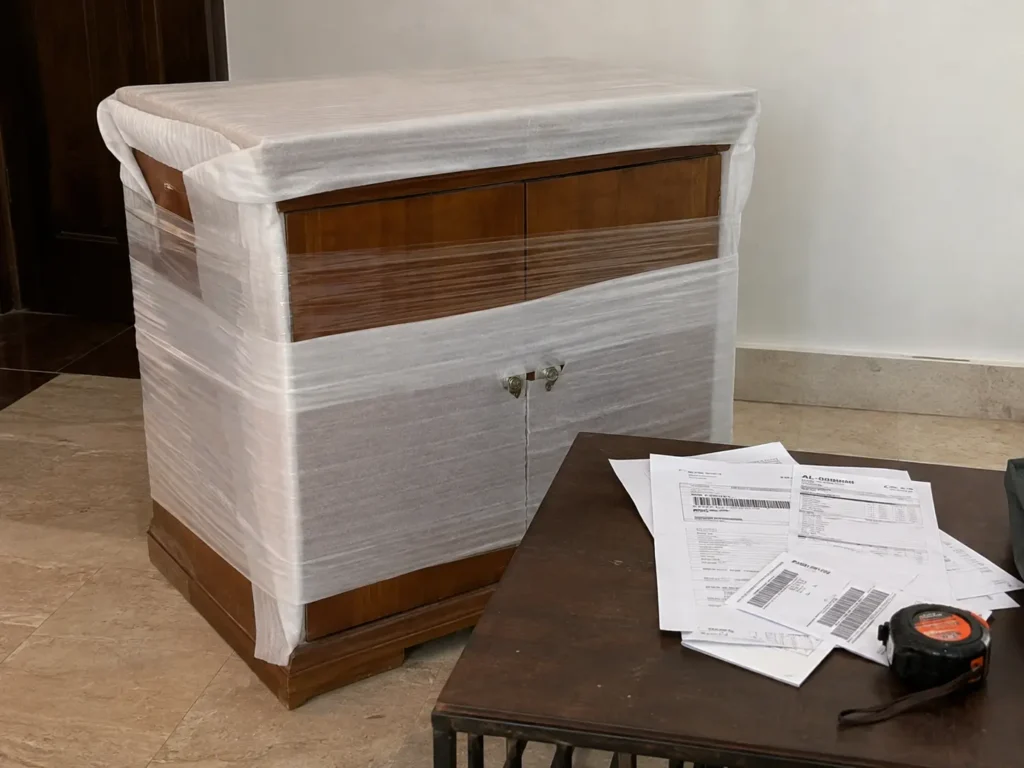
As a rough rule, if a piece is replaceable for less than what shipping would cost, it’s rarely worth the logistics and the wait, sea freight in particular can take 6 to 12 weeks to arrive. Save shipping for things that are either irreplaceable, an antique, a custom piece, or genuinely still economical to move at your specific volume.
4. Storing it, if you’re not entirely sure this is permanent
Not every departure from Dubai is final. If there’s a real chance you’ll be back, a new contract, an uncertain job situation, a “let’s see how it goes” move, short-term storage can be a smarter middle ground than selling everything and starting from zero if you do return. This avoids the double cost of selling cheap now and rebuying at full price later.
Weigh the monthly storage cost against how likely you actually are to come back, and be honest with yourself about the timeline, storage that quietly runs for two years while you decide is rarely the bargain it felt like at month one.
5. Offering it to your landlord, the next tenant, or your own movers
This one gets ignored all the time. If your furniture is, in shape ask your landlord or letting agent if the new tenant would like to buy or take any of it this happens more often than people think especially with big items that are hard to move. It’s a easy sale that avoids the whole online listing process.
Timing this properly matters more than the method you choose
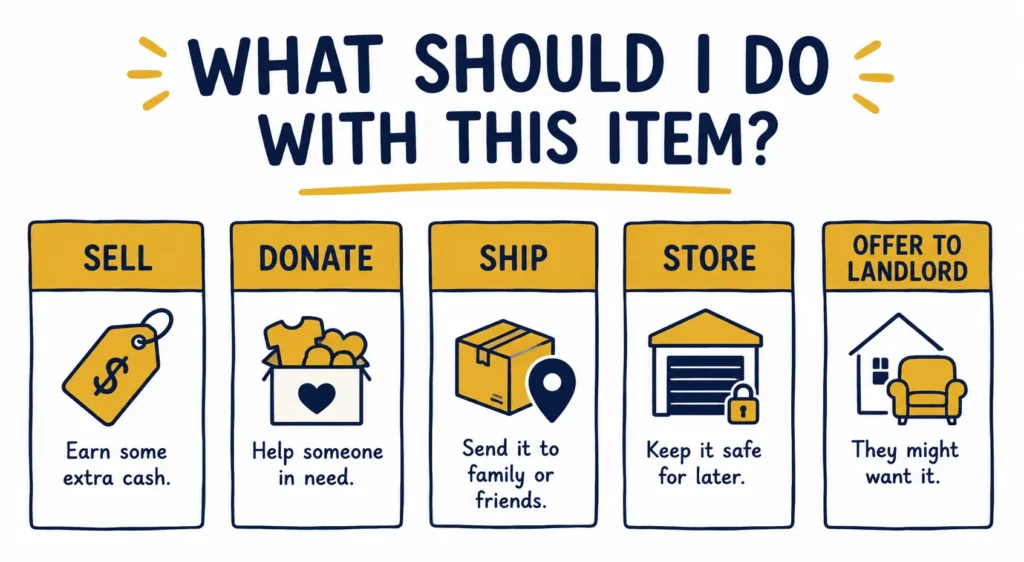
Whatever combination of these five you end up using, the real key is starting early. A good rule of thumb, sort your furniture decisions into three piles, selling, donating, shipping, roughly six weeks before your move, rather than trying to figure it all out in the final week alongside visa cancellations, bank closures, and everything else already crowding your departure checklist.