
Most people call a mover expecting the same conversation regardless of home size. Tell them your address, get a number, book a date. That works fine for a small apartment. It falls apart pretty quickly once you’re talking about a full house, three or four bedrooms, a decade of accumulated stuff, kids’ rooms, a garage nobody’s opened in a year.
We had a customer last year in Al Nahda who’d booked with someone else first, based purely on a phone call. Crew showed up, took one look at the garage, and said they’d need to come back another day for the rest. She called us that afternoon and we finished the job by evening. Not every house move goes sideways like that, but it happens more than people expect when nobody’s actually looked at what’s involved before moving day.
What makes a full house move different from an apartment
A house isn’t just more rooms, it’s more of everything. More furniture that’s been sitting in the same spot for years and might not come apart the way it used to. More boxes, since a family home tends to accumulate things an apartment never has room for, sports equipment, seasonal decorations, a home office setup, sometimes a whole storage room full of things nobody’s touched since they moved in.
There’s also the timing side of it. A house move usually means coordinating around school pickup, work schedules, sometimes even pets that need to be out of the way while boxes are going out the door. None of this is complicated on its own. It just means the day needs a bit more planning than “show up and start loading.”
How much a house move actually costs
This depends more on what’s actually inside the house, than the number of bedrooms listed. A three-bedroom house where a young couple has lived for two years costs less to move than a three-bedroom house where a family has raised two kids and never really cleaned out. Both are called “three-bedroom”. They are not the same job.
Because of that, we don’t work off a flat per-bedroom price. We ask customers to send a short video, walking through each room including the garage, storage areas and any outdoor space, so we can see roughly what’s there. Takes most people five or ten minutes to film on a phone. From that we can give an accurate number without anyone needing to take a day off work for an in-person visit. Once we’ve quoted based on that video, the number holds. If something wasn’t visible and turns out to add real time to the job, we’ll talk it through with you rather than just adding it to the bill.
Packing a house without losing track of anything
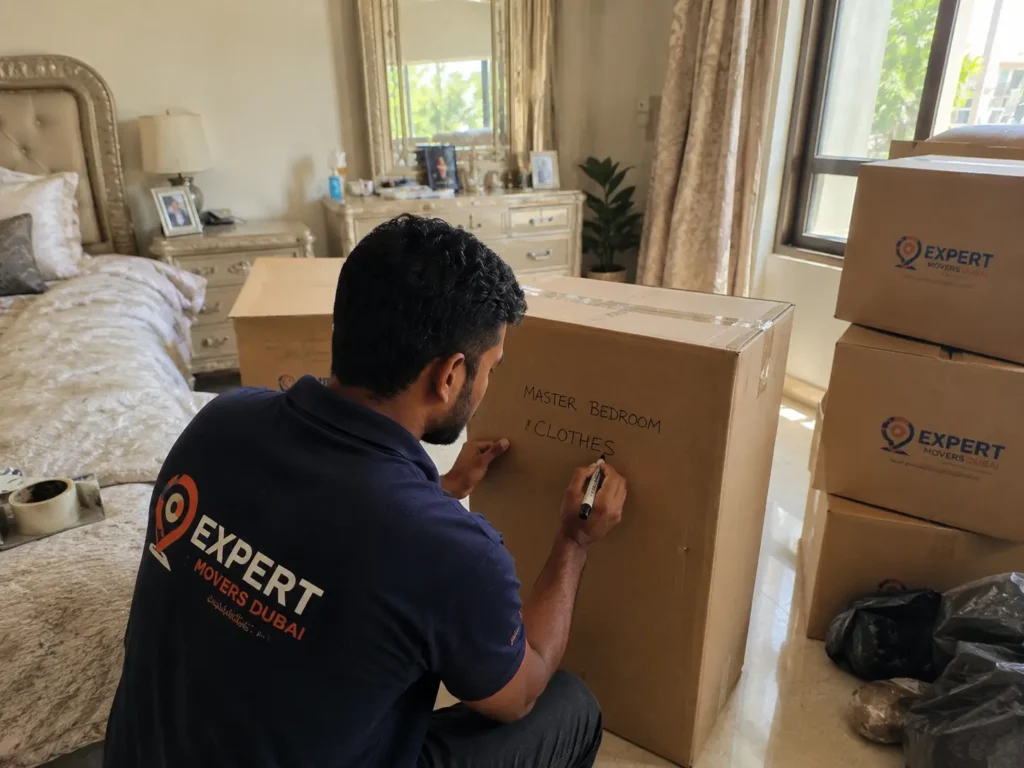
When you have a big home it is easy to misplace things. You might put something in a drawer. Forget about it.. You might leave a box in a cupboard and nobody will remember it is there. That is why we pack each room separately. We label each box with where it’s going not just what is inside. This way the boxes will end up in the room at the new house. They will not just get put anywhere there is space, on the floor.
Fragile items get handled separately from general packing. Glassware, electronics, framed photos, anything breakable gets wrapped by someone whose job that day is specifically fragile items, not whoever’s nearest with a free hand. It’s a small thing on paper. In practice it’s usually the difference between unpacking a box and finding everything fine, or finding out the hard way that something didn’t survive the trip.
Getting your home ready before we arrive
A bit of prep on your end makes a real difference to how smoothly the day goes. Setting aside anything you’re taking in your own car, passports, jewellery, medication, laptops, helps avoid the panic of digging through boxes later looking for something important. If you’ve got small valuables like this, it’s worth keeping them completely separate from what the crew packs, just so there’s no confusion about where they ended up.
It also helps to have a rough idea of which room goes where in the new place before we arrive, even if it’s just a mental note rather than anything written down. Telling the crew “this is the kids’ room, this is the study” as boxes come off the truck saves a lot of back and forth compared to figuring it out on the spot.
If there’s anything you’re leaving behind, furniture you’re not taking, appliances staying with the property, it’s worth mentioning that clearly beforehand too, so nothing gets accidentally loaded that was never meant to move.
What to do with things you’re not taking
Most house moves turn up things people had honestly forgotten they owned. Old furniture that doesn’t fit the new place, appliances being replaced, clothes and toys that don’t need to make the trip. Sorting this out before moving day, rather than during it, saves both time and money, since you’re not paying to move things that are just going to sit in a garage at the new house anyway.
A lot of our customers donate usable furniture and clothing locally rather than dealing with disposal themselves. It’s worth setting this aside a week or two before the move rather than trying to sort it the morning the truck arrives, when everyone’s already stretched thin.

Moving day with kids or pets in the house
House moves are often family moves, which means there’s usually a couple of small people, or a dog, wondering why the living room is suddenly full of boxes. It’s generally easier on everyone if kids and pets have somewhere calm to be during the busiest hours of loading, whether that’s a quiet room that gets packed last, or a day at a relative’s place while the truck is being loaded.
This isn’t something we manage for you, just something worth planning around, since a moving day with a toddler underfoot or a nervous dog near an open front door tends to go better with a little forethought.
What people usually want to know before booking
The most common question is whether the price changes once the crew actually arrives. It shouldn’t, as long as the video we quoted from reflects what’s actually there. If a storage room gets missed in the video and turns out to be full, we’d rather have that conversation honestly upfront than spring a surprise charge on moving day.
People also ask what’s included in packing specifically. Some companies load and drive but expect everything boxed already, which means the hardest part of a house move, the actual packing, falls entirely on you. Worth confirming directly whether that’s part of the service before you book, since “full service” means different things depending on who you ask.
Lead time matters too, though not as much as people assume. A days notice is usually enough for us to get the sized crew and the right truck ready.
Sometimes same day bookings can work when there is no choice. They limit how much time we have to make sure everything is done properly with the crew and the truck.
We like to have a days notice so we can get the crew and the right truck ready, for the job.
What moving day looks like for a house move
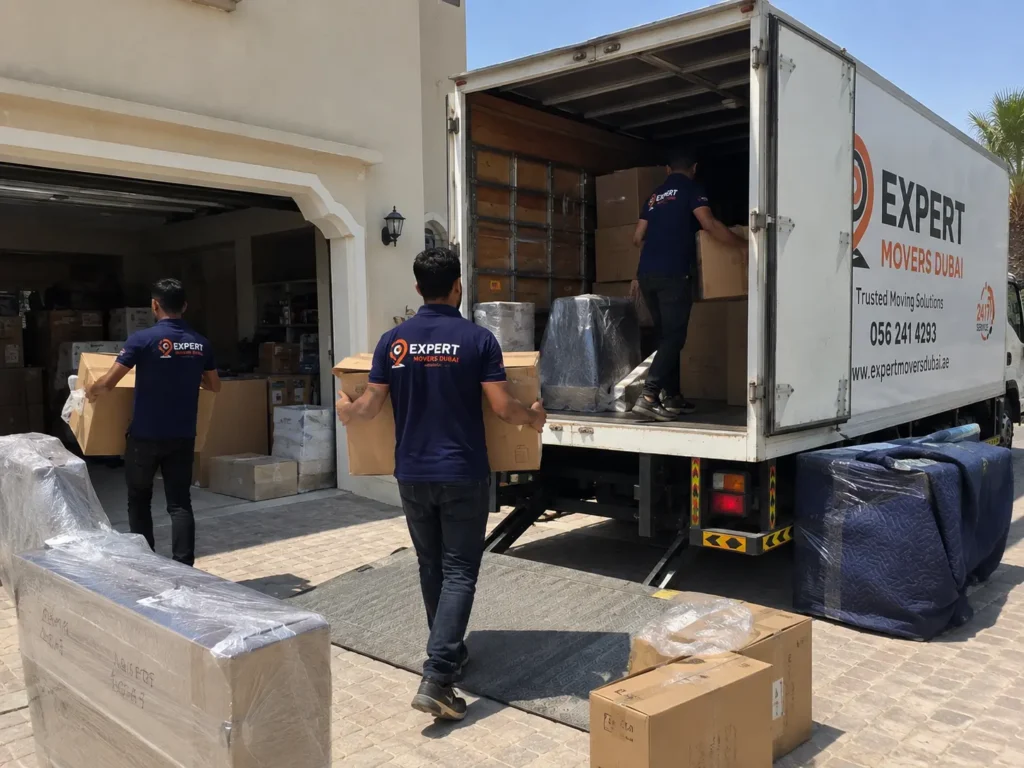
The crew arrives with padding materials and boxes already loaded, not scrambling to find supplies once they’re inside. Kitchen and last-minute items usually get packed first, since bedrooms and living areas are typically ready to load straight away if the video walkthrough covered the layout properly beforehand.
Loading goes room by room rather than grabbing whatever’s closest, which keeps things organized and makes unloading faster since items come off roughly in the order they’ll go back into rooms at the new place. For a full house, expect the whole process, loading, driving, unloading and basic furniture placement, to take most of a day. Bigger homes or longer distances can run into a second day, and we’ll flag that when we send your quote rather than let it surprise you halfway through.
Not a full house move? Here’s what else we handle
Movers and Packers Dubai Services for Every Type of Home and Office
Villa Movers and Packers in Dubai
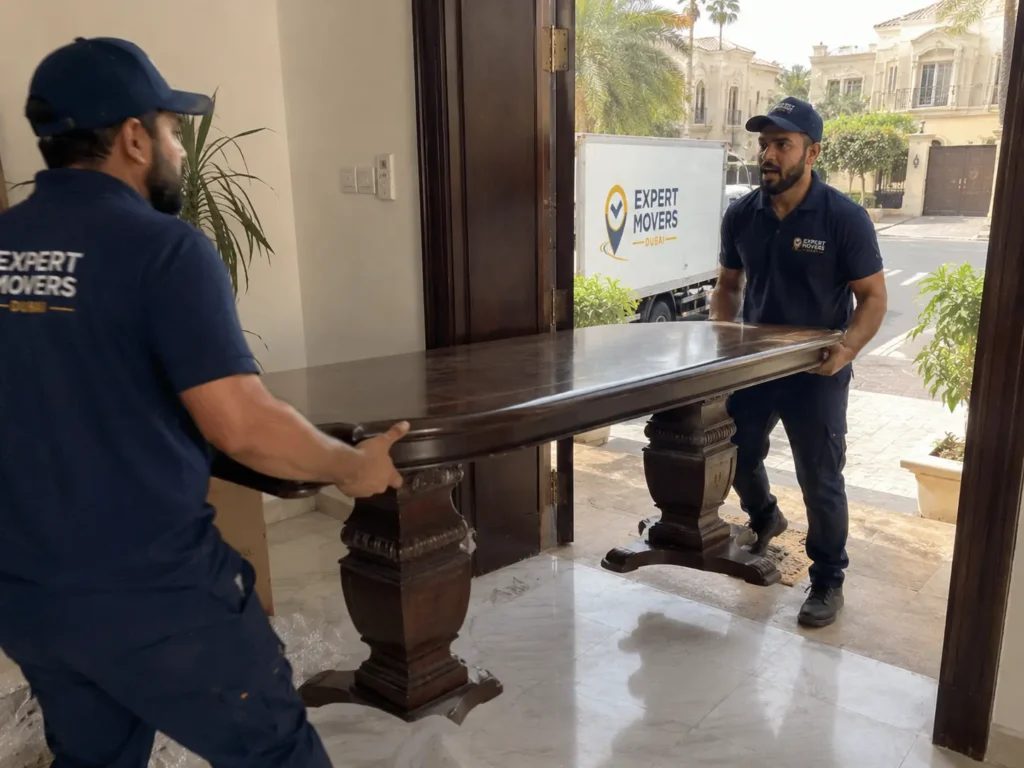
Villas bring their own set of challenges, multiple floors, outdoor furniture, and community access rules that a standard house move doesn’t have to deal with. If you’re relocating a larger property with a garden or a driveway’s worth of extra furniture, our villa moving service is built specifically around that.
Local Movers and Packers in Dubai
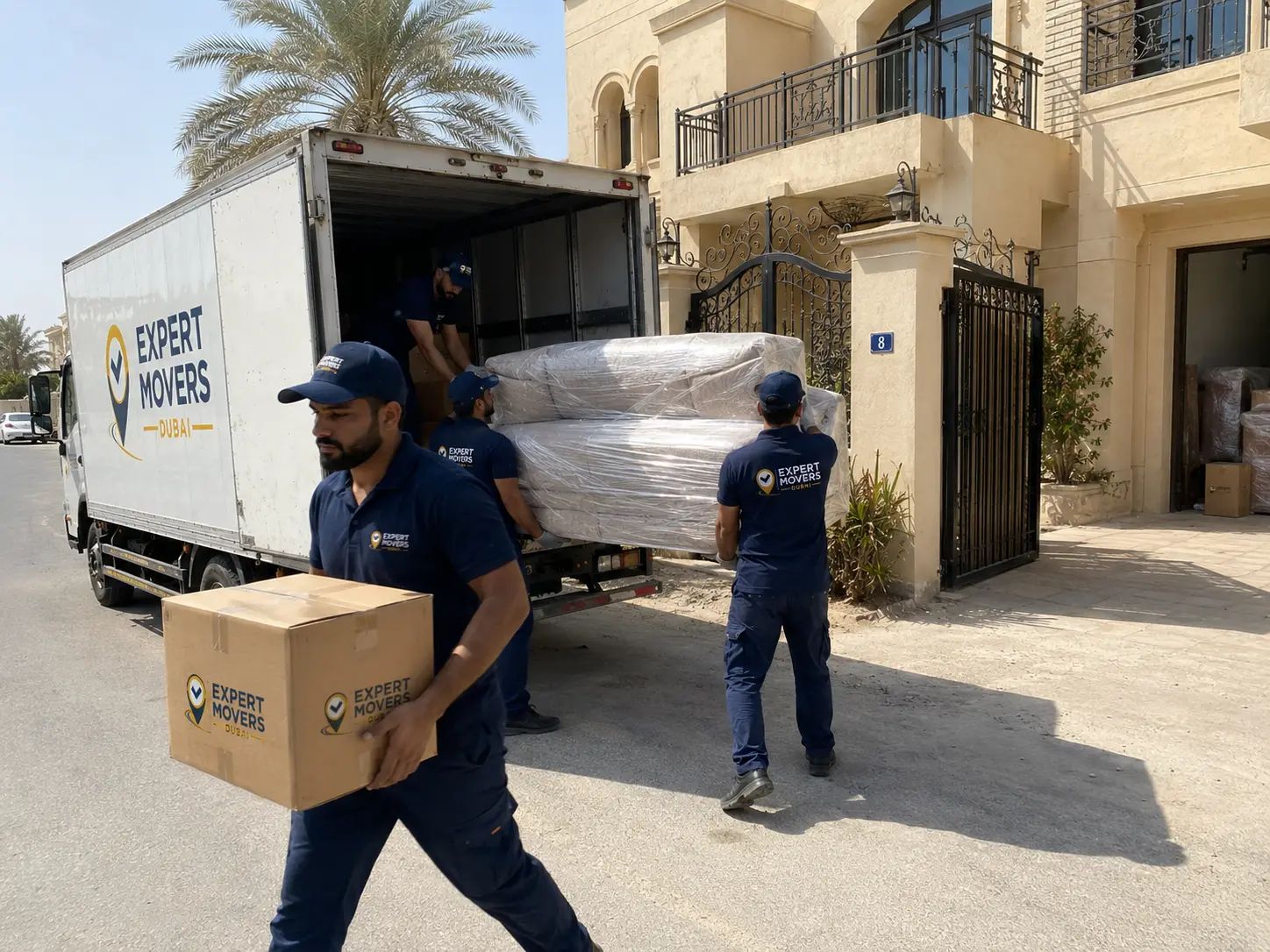
Moving across the city without the scale of a full house, say a smaller move from one neighbourhood to another, doesn’t need the same planning. Our local moving service is quicker and priced for exactly that kind of job.

Office and Corporate Movers in Dubai
If this is actually a business relocation rather than a home move, timing matters more than anything else. We handle office moves overnight or over a weekend so a company isn’t losing working hours, worth a look if that’s closer to what you need.