
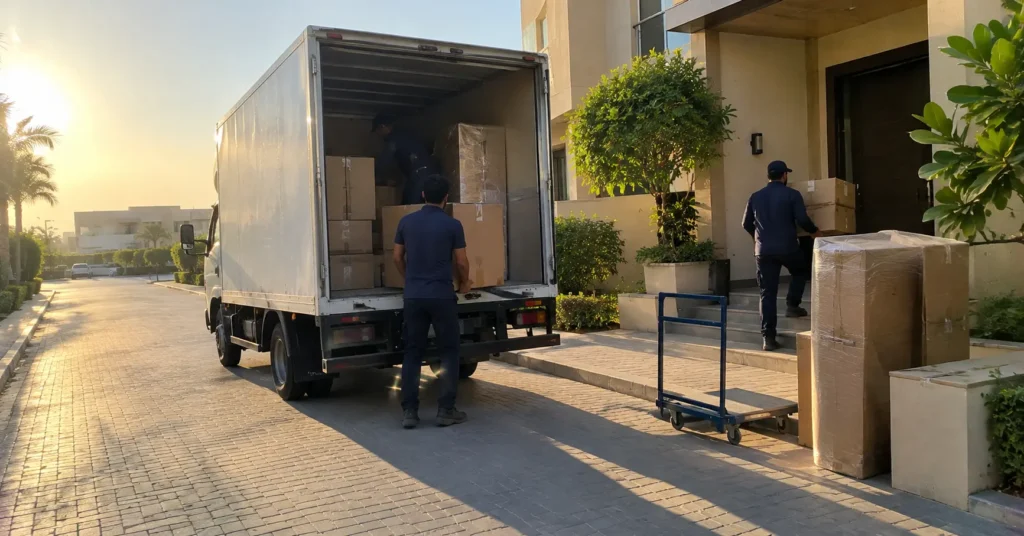
Many people who book their move think the crew will arrive, load everything, and leave. In reality a move is a series of steps with stress points, and knowing where those points are makes the difference between a day that ends by lunch and a day that stretches past sunset.
Here’s how a moving day in Dubai schedule genuinely unfolds and the moments where things typically slip.
Table of Contents
Before 6:00 AM—Your building’s window has already been decided
This part happens before the crew arrives, and it’s the single biggest constraint on your entire day. Most Dubai buildings assign a three- to four-hour elevator slot for moves, often mornings only, sometimes restricted to specific days of the week. You don’t choose this. The building does.
If your slot is from 7:00 to 11:00 and loading is not done by then, the rest has to wait until the available window, which could be tomorrow. This is why a moving day Dubai schedule is built backwards from the elevator booking, not forwards from when you’d prefer to start.
In summer this compresses further. Crews start at 6:00 or 7:00 AM specifically because outdoor labor is legally restricted during midday heat from June through September.
Hour 1—Arrival and walkthrough
The team lead walks through your home, room by room, confirming what’s actually being moved against what was quoted. This takes fifteen to thirty minutes, and it’s genuinely worth being present for.
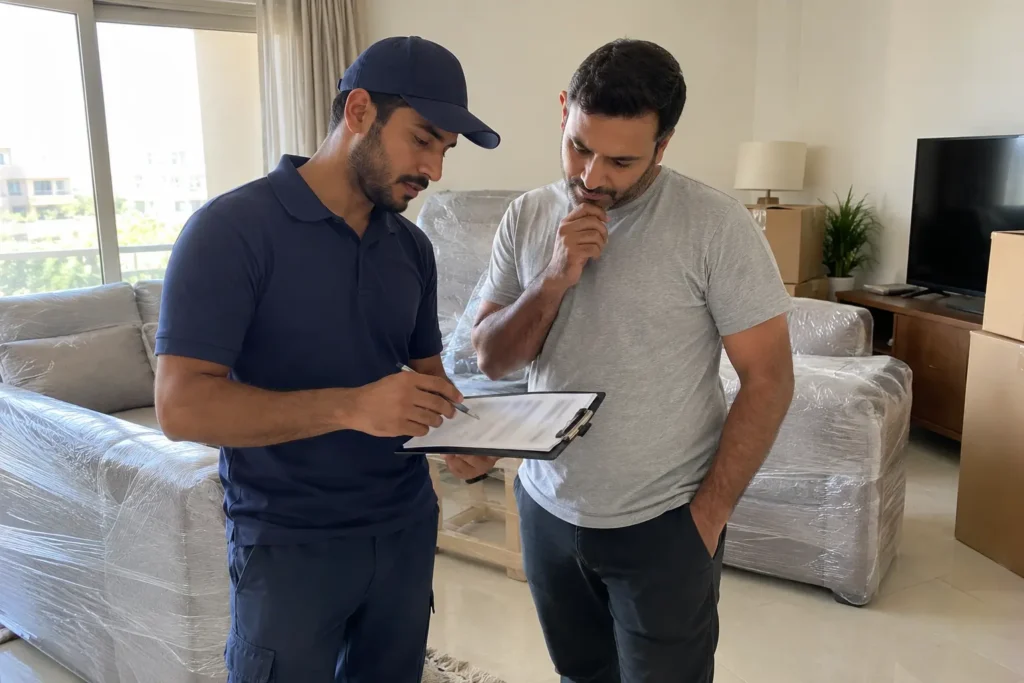
This is where anything missed in your original quote surfaces. A wardrobe that needs dismantling. A safe nobody mentioned. Boxes in a storage room that weren’t in the video. Better it’s flagged here than discovered mid-load.
Hours 1 to 3—Packing what isn’t packed yet
If you’ve booked full packing, this is the longest phase. Kitchens take far more time than people expect, with glassware, appliances, and the cupboard nobody has opened in a year. Crews usually work room by room rather than jumping around, which makes unloading faster later.
If you’ve packed yourself, this phase mostly disappears, and loading starts almost immediately. That’s the main reason self-packing genuinely lowers your quote.
Hours 3 to 5—Loading, and the elevator clock
Furniture gets wrapped, disassembled where needed, and moved down in trips timed around your building’s lift. This is where the assigned window matters most.
In a tower, only the service lift can be used for furniture, not the passenger elevator, and if that lift is shared with another move or a delivery that morning, your crew is queuing. Nothing about this is avoidable on the day. It’s decided by how far ahead the booking was made.
Hours 5 to 6—The drive
The plan looks simple on paper. It is not that simple in practice. Traffic in Dubai between about 7:00 and 9:30 in the morning and after 5:00 in the evening really adds extra time. That is why most people start their day early in Dubai.
Distance matters less than route. A short move that crosses a congested interchange can take longer than a longer one on clear roads.
Hours 6 to 8—Unloading and placement
At the new property, the same elevator and permit constraints apply again, which catches people off guard. Both buildings need coordination, not just the one you’re leaving.
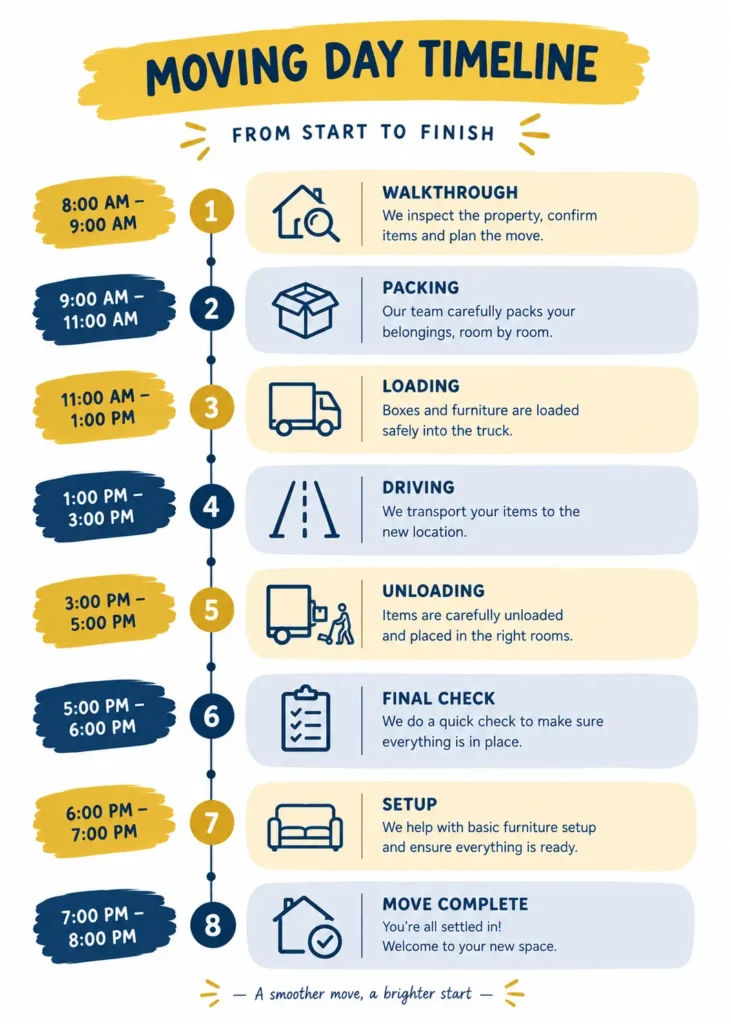
Items come off roughly in reverse order of loading, which is why room-by-room loading pays off. Furniture gets reassembled and placed where you want it, so being present to direct this saves shifting a heavy wardrobe twice.
Hour 8—The final walkthrough, and the part most people skip
Before the crew leaves, walk through every room and check items against your inventory list. Look at furniture corners; check anything fragile you’re worried about.
Do not sign the delivery receipt until you’ve done this. Once signed, you’ve confirmed everything arrived in good condition, and raising damage afterwards becomes significantly harder to resolve.
If something is damaged, note it on the sheet immediately, in detail, and photograph it before anything is moved again.
What actually makes a moving day run long?
Three things, consistently. Permits not arranged in advance, which means a truck sitting at a gate instead of being loaded. Dubai buildings typically want NOC paperwork three to seven days ahead, and same-day requests rarely succeed.
Underestimating volume, which means multiple trips where one was quoted. This is what a proper video walkthrough prevents.
Missing the elevator window, usually caused by one of the first two. Once that slot closes, the day stops regardless of how much is left.
What to have ready before the crew arrives
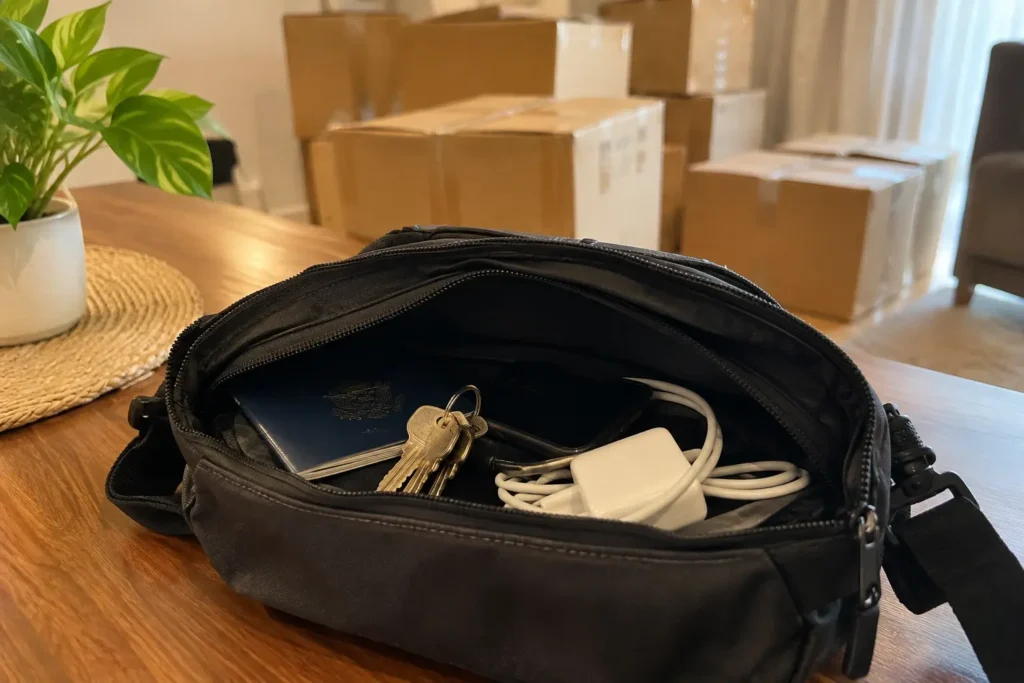
Keep a small bag with you containing passports, Emirates ID, tenancy documents, chargers, medication, and anything valuable. This stays in your car, not on the truck.
Clear a path from the front door to the lift. Have your permit paperwork accessible for building security at both ends. Decide in advance which room each box goes to in the new place, even roughly, so you’re not making those calls while someone stands holding a heavy box.