
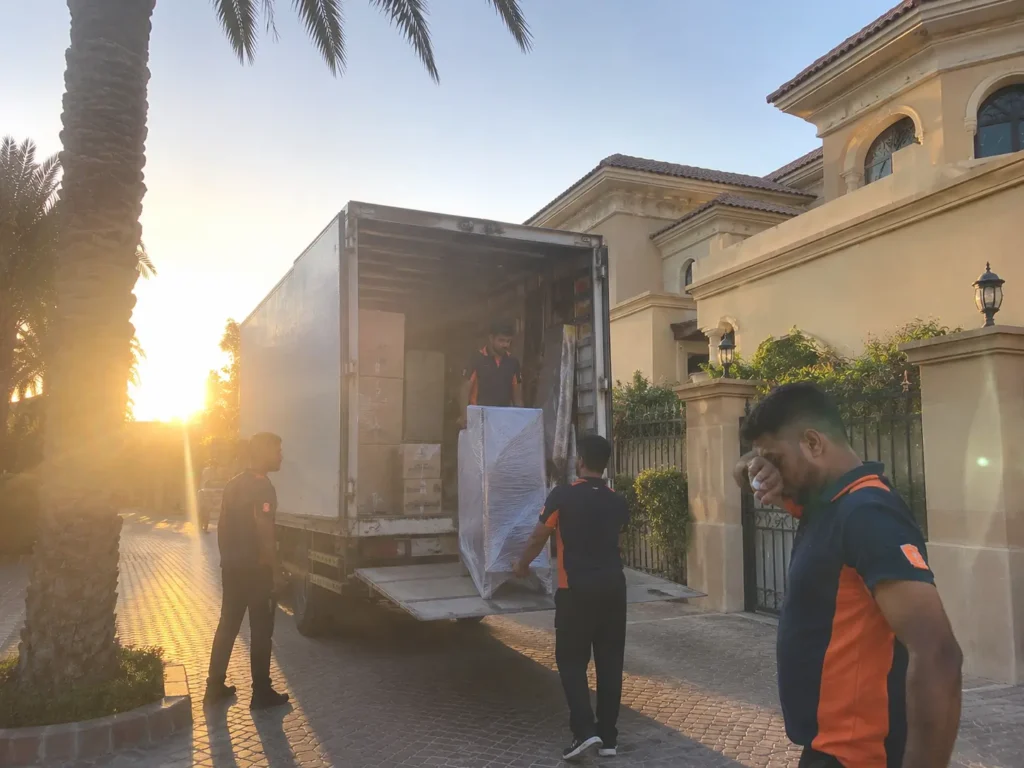
I watched a crew once try to load a full villa’s worth of furniture at 1pm in August. Temperature was somewhere past 45 degrees. By 2pm one of the guys was sitting in the shade looking genuinely unwell, and we still had half a truck to go. That job should never have been scheduled for that time of day, and it taught me more about summer moving in Dubai than any training session ever could.
Summer moving in Dubai isn’t just uncomfortable. It’s a different kind of job entirely, one that can quietly damage your belongings and, if you’re not careful, actually put people at risk. Here are the mistakes I see happen over and over, and what to do instead.
Table of Contents
Mistake 1: Scheduling a summer move for the middle of the day
This is the biggest one, and it’s not just about comfort. There’s an actual UAE law banning outdoor manual work between 12:30pm and 3pm, from mid-June through mid-September, specifically because working outside during that window is genuinely dangerous. A summer moving job in Dubai needs to start early, ideally before 6am, sometimes as early as 5 or 5:30am for a villa with a lot of outdoor furniture and garden items.
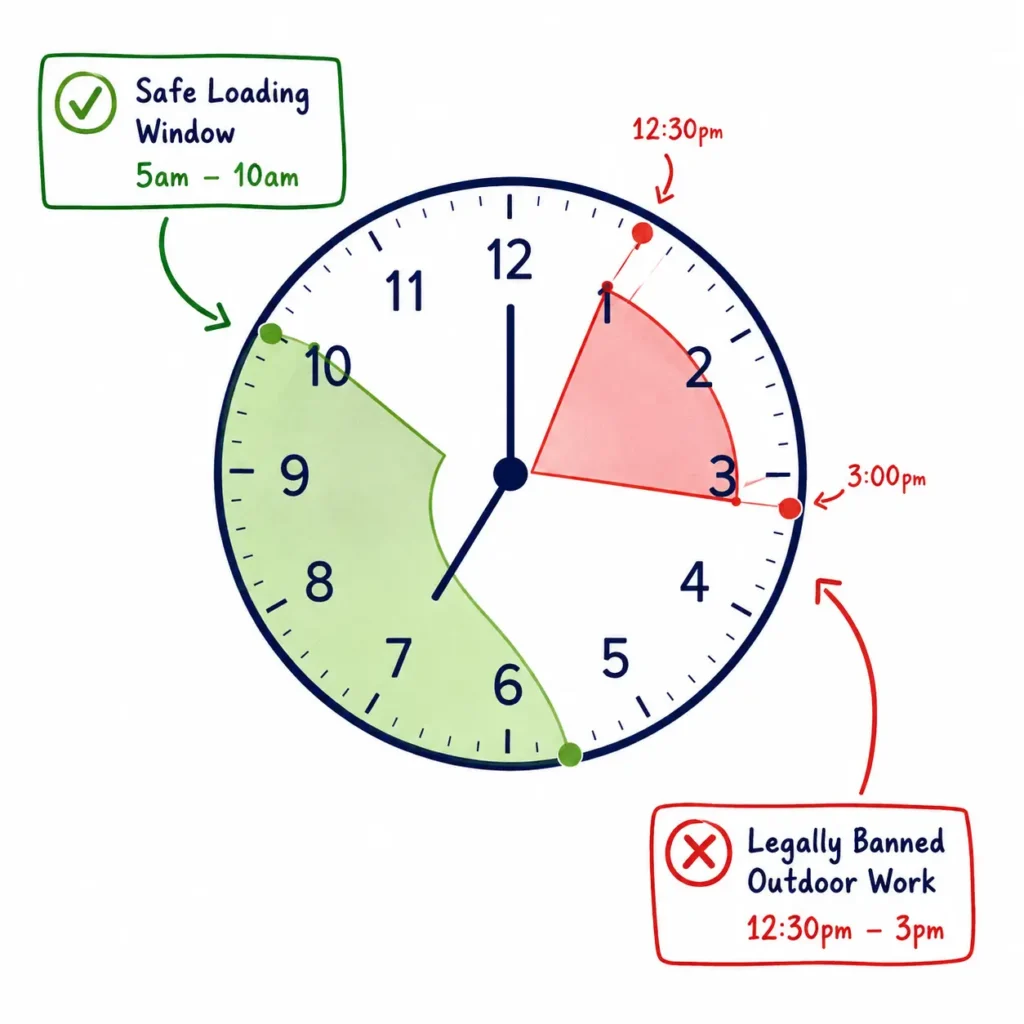
The window between sunrise and 10am is really the only stretch where outdoor loading is manageable. I notice that after that heat builds quickly and by the afternoon you are not uncomfortable but you are stepping into truly unsafe conditions, for anyone moving heavy furniture.
Mistake 2: Wrapping wood and leather furniture in plastic
This one surprises people. It feels logical, plastic keeps things clean and protected, right? Except wrapping wood or leather furniture directly in plastic shrink wrap during a Dubai summer move traps moisture underneath it. That creates a small greenhouse effect inside the wrap, and the result is warped wood or leather that starts developing mold within weeks, not the protection you were expecting.
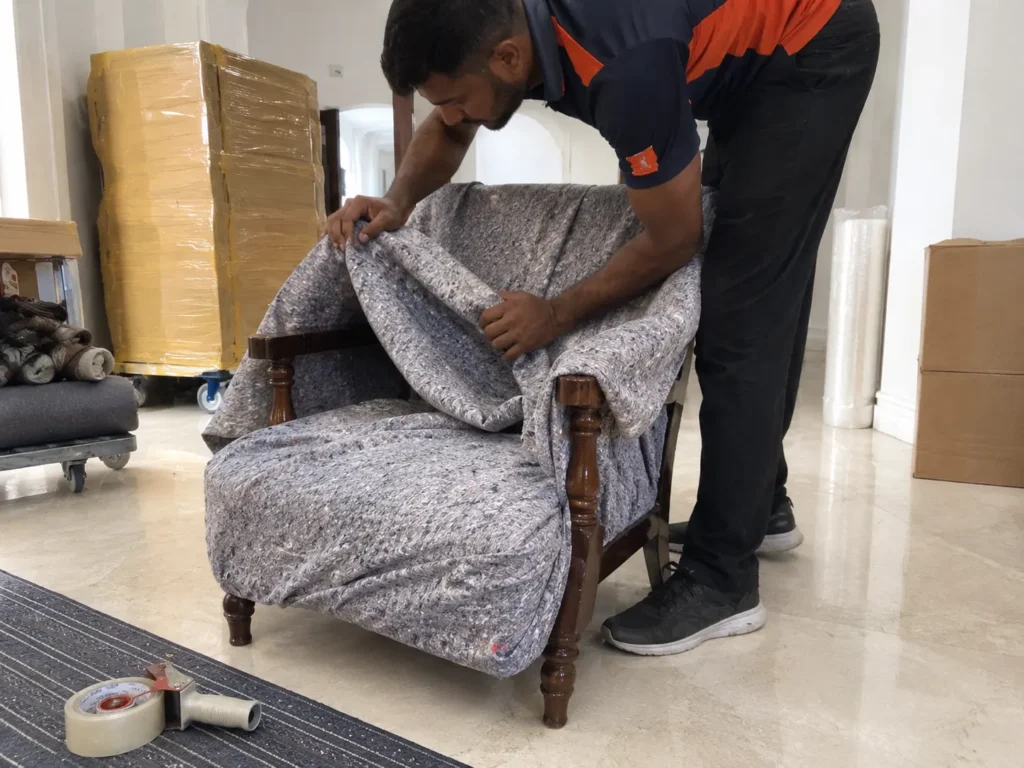
The fix is simple, breathable moving blankets or cotton covers directly against the furniture, with plastic used only as an outer layer against scuffs, not sealed tight against the material itself.
Mistake 3: Not thinking about what happens to a truck sitting in the sun
A moving truck in Dubai stayed parked and loaded for ninety minutes under a summer sun. The fabric sofa absorbed that heat. The sofa stayed uncomfortably warm for hours, after delivery even after the sofa was placed in an air‑conditioned room. The sofa is not damaged,. The sofa can feel like it has been sitting in an oven, which functionally the sofa has.
More seriously, anything electronic shouldn’t be riding in the back of a hot cargo area at all during a summer move. Laptops, TVs, anything with a battery or sensitive components travels safer in the cab with the crew, where there’s at least some airflow and shade, not baking in the back for the length of the drive.
Mistake 4: Ignoring what heat and humidity do to paper
This is the one mistake that nobody thinks about until the damage, to the paper is already done. Paper becomes noticeably more brittle when it cycles between extreme outdoor heat and cold air-conditioned interiors during a summer move, the kind of temperature swing that’s completely normal on Dubai moving day. That cycling creates condensation, and condensation on paper over the following weeks can cause warping and, in bad cases, actual mold on documents.
Financial paperwork, legal documents, anything irreplaceable, treat these as priority items during any summer relocation in Dubai. Keep them in a sealed folder in an air-conditioned car with you, not boxed up in the truck with everything else.
Mistake 5: Assuming your crew can work the same pace as any other season
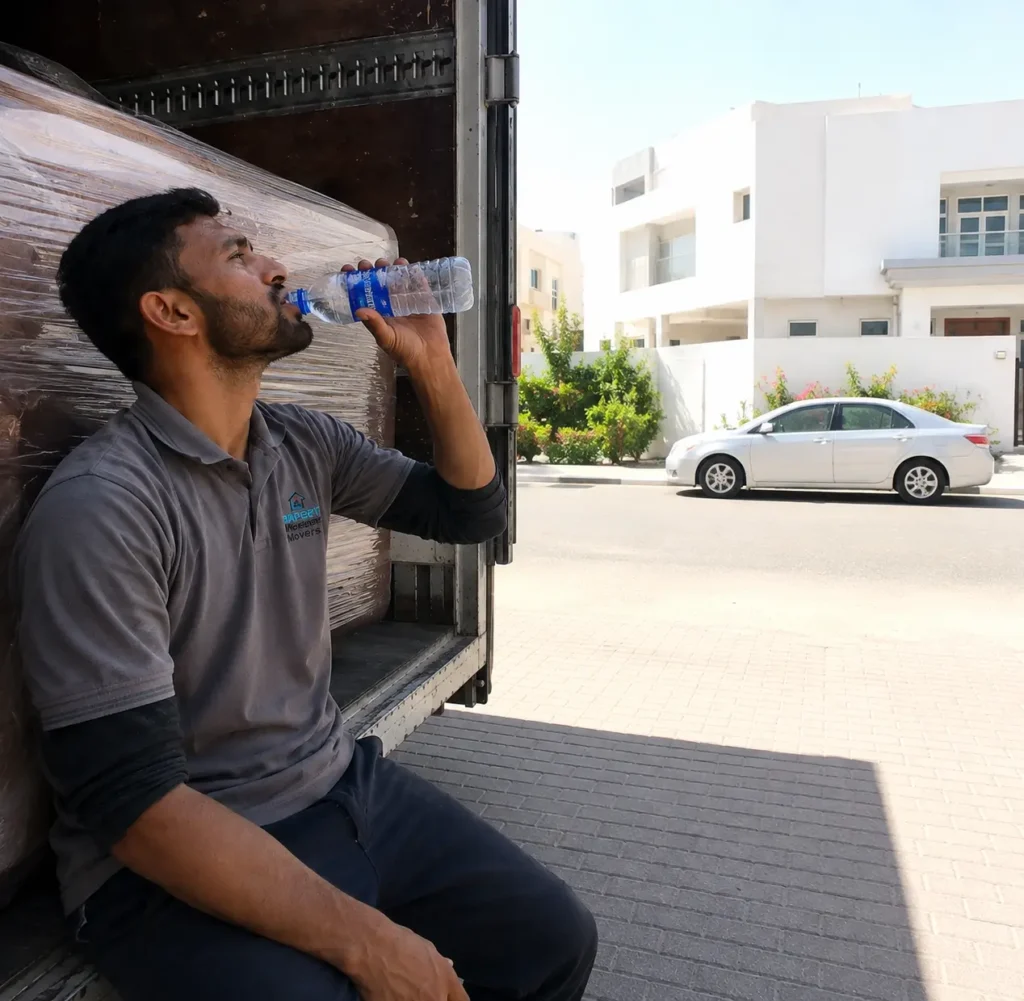
A moving crew working flat out in Dubai summer heat without proper rotation and rest breaks isn’t just going to be slower, they’re at real risk. Twenty to thirty minutes of sustained heavy lifting in temperatures above 40 degrees with high humidity is genuinely pushing safety limits without a break. Any crew that’s rushing through a full villa move in the middle of a Dubai summer without stopping for water and shade breaks is cutting corners somewhere, and it’s usually either your furniture or their own wellbeing that pays for it.
A properly run summer moving job in Dubai builds these breaks into the schedule from the start, which is part of why summer moves sometimes take a bit longer than the exact same job would in December.
Mistake 6: Picking July or August if you have any flexibility at all
Not every summer move can be timed around the calendar, sometimes a lease ends and that’s that. But if there’s genuinely any flexibility, July and August are the roughest months to move house in Dubai, with mean temperatures regularly sitting between 41 and 43 degrees and humidity making it feel considerably worse than the number suggests.
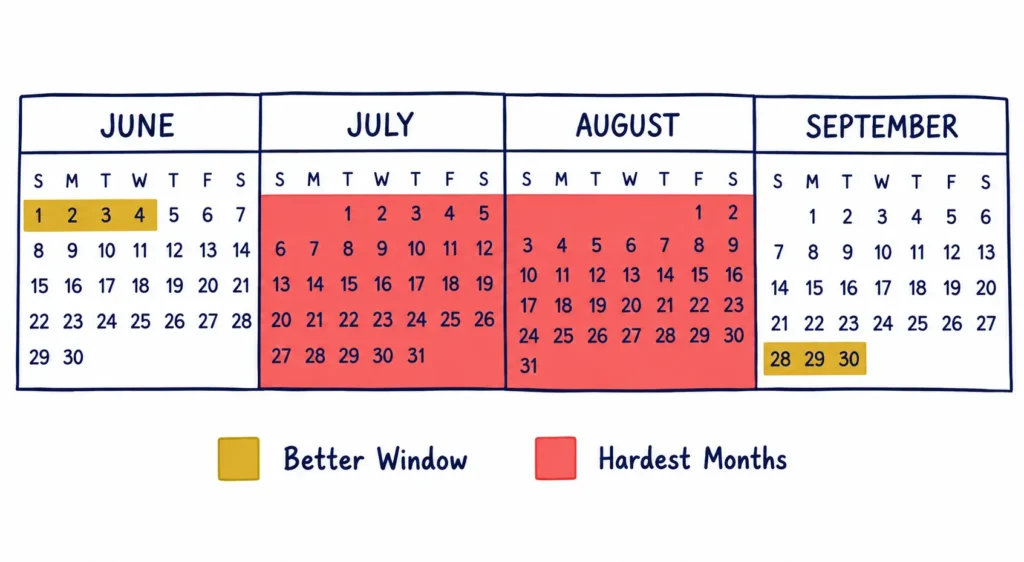
Early June or mid to late September are meaningfully easier, still technically summer, still hot, but noticeably more manageable than the peak of it, without giving up the pricing and availability advantages that come with the quieter off-peak season.
Mistake 7: Treating books and cloth-bound items like they’re immune
Books with cloth or paper spines quietly suffer during a Dubai summer move the same way loose paper does. Heat exposure followed by rapid cooling can warp the binding or cause visible separation at the spine, damage that often doesn’t show up until weeks after the move when you finally pull that box open. If you have a real book collection or anything that is covered in cloth and worth keeping in condition treat it with the same care you would use for something that is truly delicate. Don’t put it in a box just because there was space left. Think about it as something and handle it properly.
How we actually handle summer moves
A summer move in Dubai isn’t something we do the same way as an October move and just hope for the best. Start times get pushed earlier, sometimes well before sunrise for a big villa job. Wrapping materials get chosen based on what’s actually being moved, breathable covers for wood and leather, not blanket plastic wrap for everything. Electronics and important documents ride separately from the general cargo. And the crew gets proper rotation and water breaks built into the schedule, not squeezed in as an afterthought once someone’s already struggling.
None of this is complicated, it just needs to actually be planned for rather than assumed to be the same as any other season.